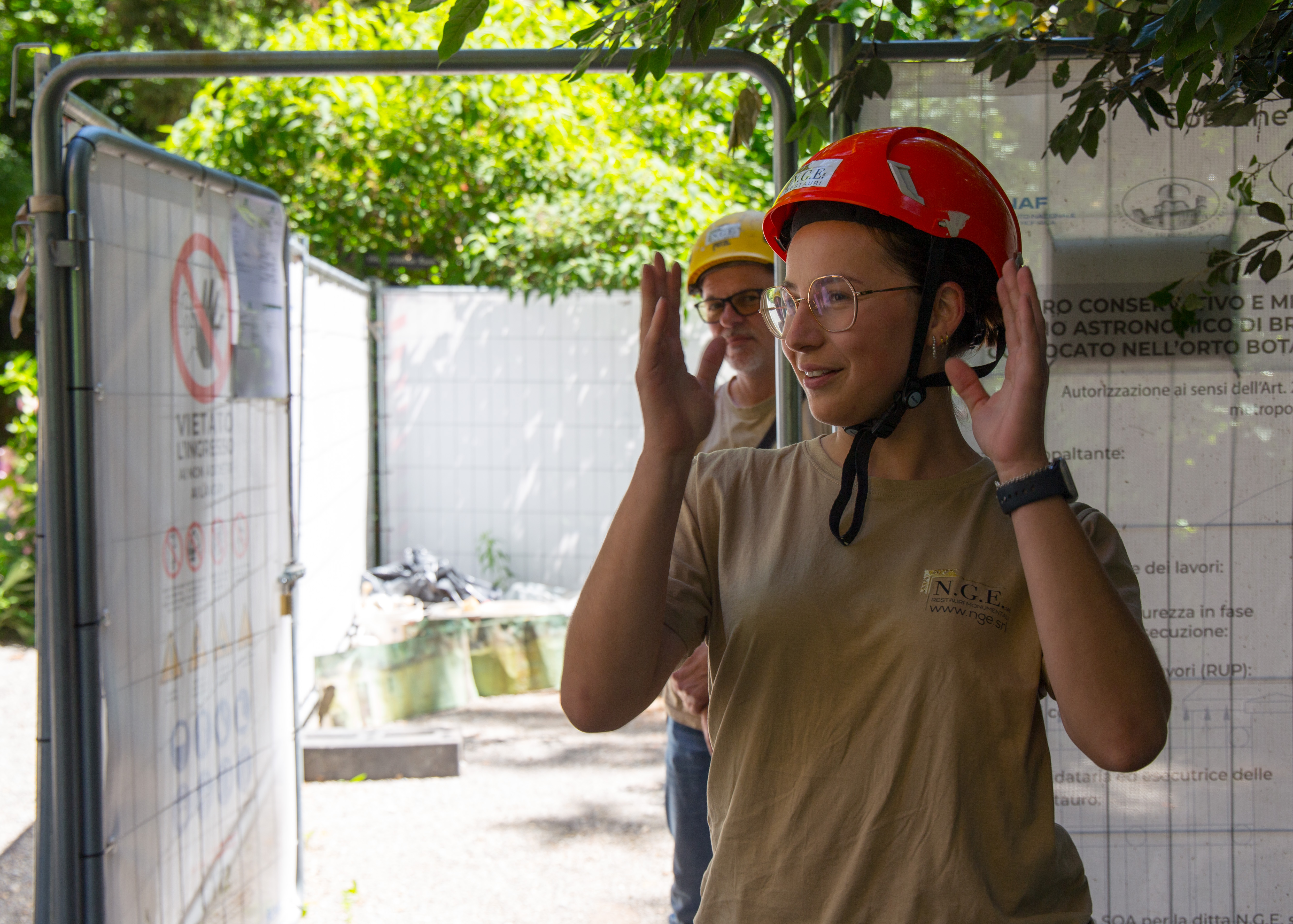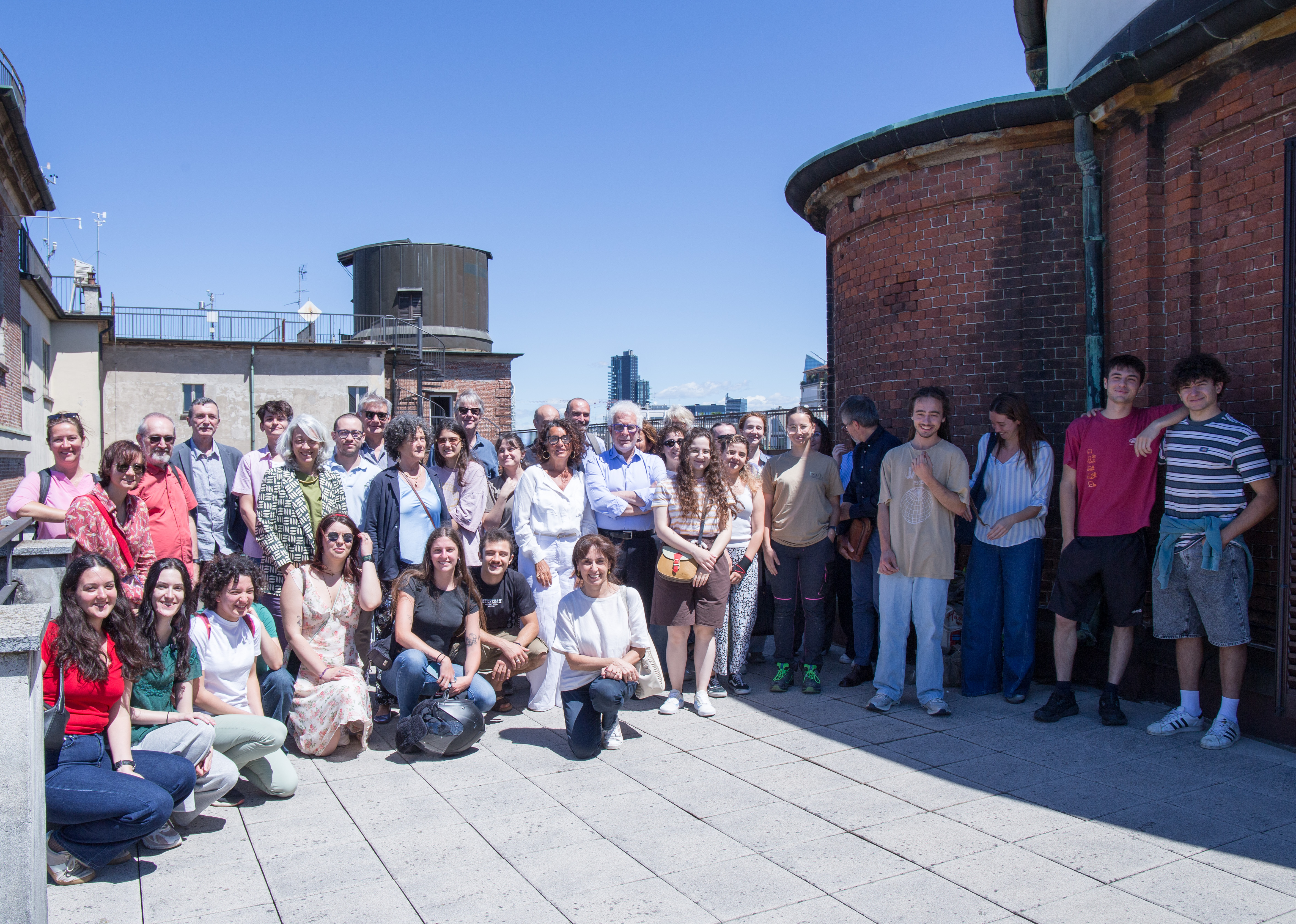
On June 3, students interested in cultural heritage restoration projects
were welcomed at the INAF-Brera Astronomical Observatory and the Botanical Garden
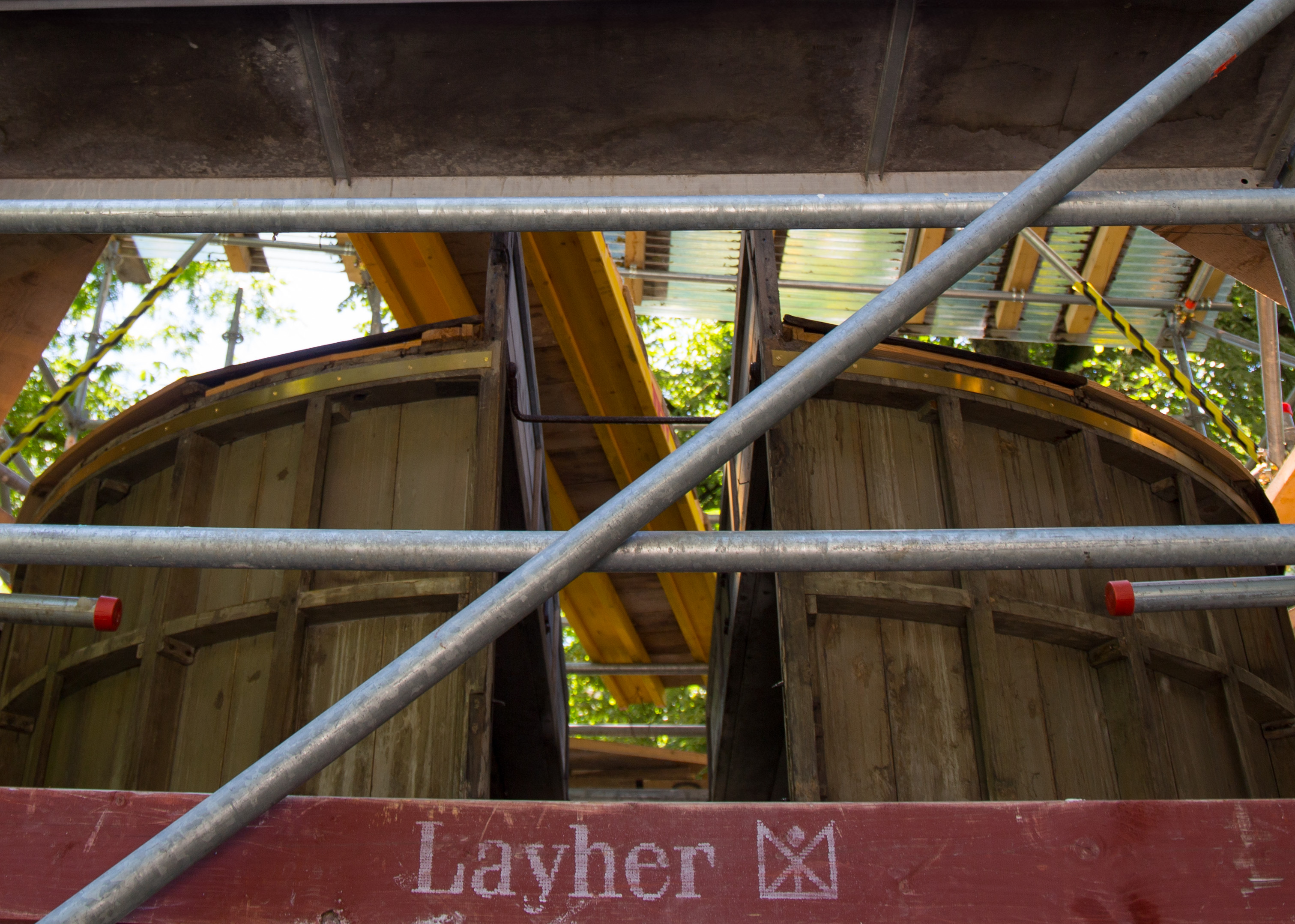
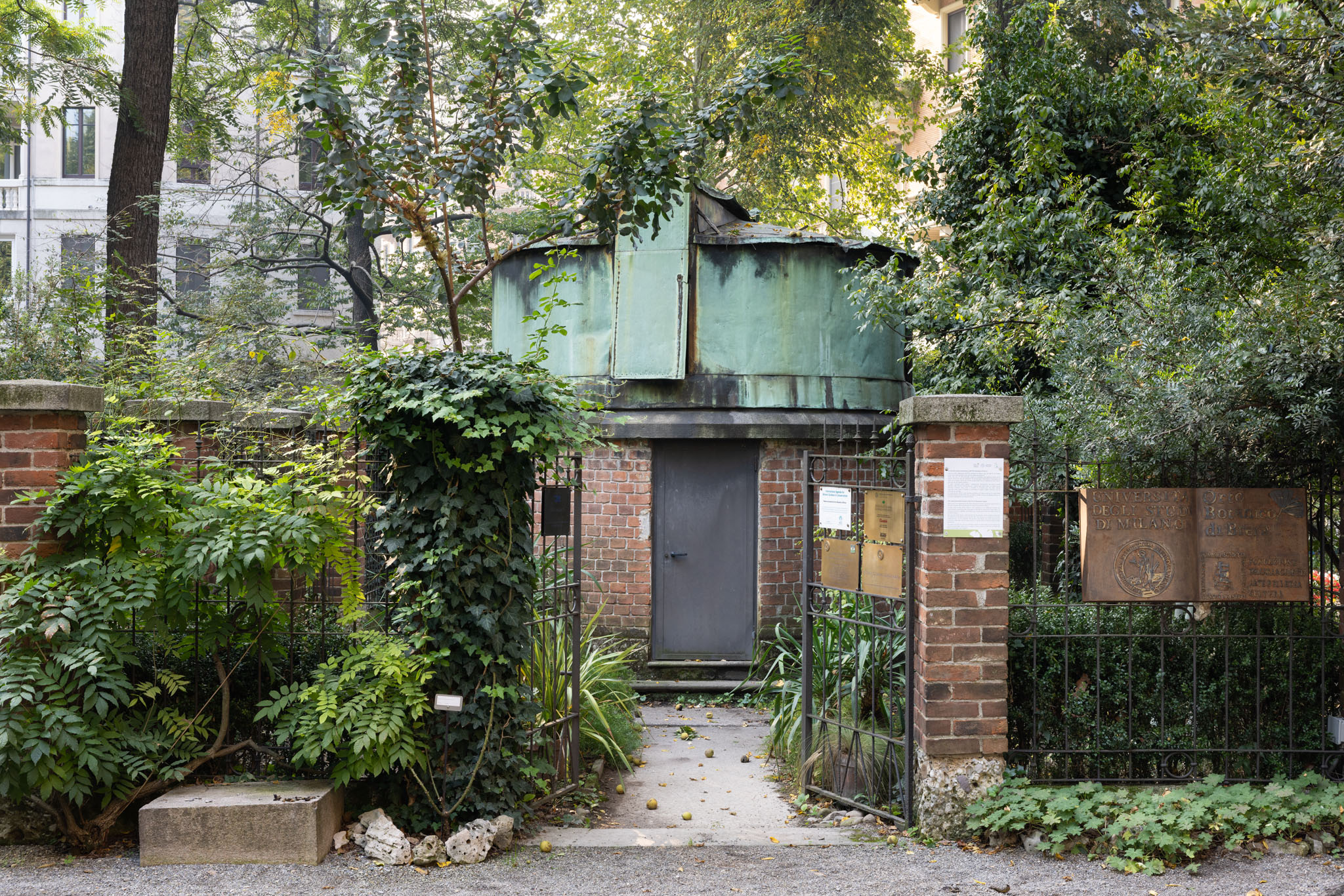
of the University of Milan. The purpose: a hands-on learning experience (cantiere-scuola)
with all the professional figures involved in the ongoing conservative restoration of the
Astronomical Geodetic Dome of the Brera Astronomical Observatory, located in the Brera
Botanical Garden.
The event was attended by students from the Bachelor’s degree program in “Cultural
Heritage: Sciences, Technologies, and Diagnostics” and the Master’s degree program in
“Sciences for the Conservation and Diagnostics of Cultural Heritage” at the University of Milan;
students from the Technology and Design Laboratory of the Bachelor’s Degree Program in
Materials Engineering and Nanotechnology at the Polytechnic of Milan; and second-year
students of the Professional Training Program (PFP) at the Botticino School of Restoration:
three institutions of educational excellence, united by a shared interest in the conservation
and restoration of cultural heritage.
Following an introduction by the Director of INAF – Brera Astronomical Observatory, Dr.
Roberto Della Ceca, on the various areas of contemporary research and advanced
technology projects in which the Observatory is currently engaged, Dr. Daniela d’Amore
(Sole Project Manager – RUP) and Architect Micaela Bordin (RUP Support) presented
the complexities that a public agency must address when carrying out a restoration project
such as that of the Cupolino: close coordination with the Superintendency, the agency
responsible for overseeing cultural heritage sites such as the Cupolino; the drafting of a
detailed design in conjunction with the Safety Plan; the selection of the restoration
contractor, the opening of the construction site, as well as the diagnostic surveys on the
state of preservation of the property and the feasibility of reusing materials, in order to
adhere to the principle of “minimal intervention,” the budget included in the Financial
Framework, and the projected timeline for the completion of the restoration.
Dr. Ginevra Trinchieri, Scientific Director of the Brera Astronomical Museum, presented the
historical investigation conducted in the archives of the Brera Astronomical Observatory and
the Civil Engineering Department at the State Archives: by studying the original documents,
it was possible to trace the original design, which is described in detail in an expense report
from 1879, which details all phases of the construction work and the materials used.
The students then attended a presentation on the diagnostic investigations carried out by
various departments at the University of Milan to determine the state of preservation of the
different materials, assess potential risks to conservation, and obtain useful information to
support the restoration project: Prof. Marco Merlini (Department of Earth Sciences and
coordinator of the undergraduate programs) presented the results of the material
characterization by diffraction conducted with Dr. Chiara Mangano on samples of the metal
cladding and other fragments that showed signs of alteration; Prof. Marco Saracchi
presented the mycological and entomological investigations to identify fungi and crawling
insects (also conducted by Profs. Costanza Jucker and Sara Savoldelli, Department of Food,
Nutrition, and Environmental Sciences); Dr. Michela Caimi presented the results of the
thermographic imaging and XRF analysis obtained from the DIART Lab (Professors Nicola
Ludwig and Letizia Bonizzoni, Department of Physics) to identify critical areas and
characterize the various materials and paints used in the structure; Dr. Antonella Testa
(Brera Botanical Garden, UNIMI) concluded by summarizing the investigations conducted by
Dr. Ivan Grigioni (Department of Chemistry) to provide guidance for sanitization and
bacterial eradication.
Next came a detailed presentation of the construction plan by Architect Mario Ziggiotto,
the project designer and construction manager. Architect Massimo Bigozzi, Safety
Coordinator, led the review of the Construction Site Safety Plan, while Professor Sara
Goidanich, professor of Material Science and Technology at the Milan Polytechnic, explained
the treatment tests currently being conducted on the copper, the primary material used in
the restoration of the Cupolino’s roof. Restorers Ester Cimolato and David Mazzero,
employees of the firm N.G.E. srl of Farro di Soligo (Treviso), which is carrying out the work,
led a tour of the ongoing restoration efforts, describing with precision and passion the
techniques, materials, and methods specific to the conservative restoration being applied to
the structure.
The numerous participants expressed great appreciation for the insights shared, for
the opportunity to meet the various professionals involved in the restoration project
in different capacities, and for the structure of the event, which highlighted the practical
nature of the work and fostered a connection between the theoretical aspects of academic
training and its concrete application in professional practice.
The initiative is part of a broader strategy to actively involve communities in the
promotion, preservation, and ongoing maintenance of cultural heritage, as
also recommended by the S.O.S. Patrimonio call for proposals issued by Fondazione Cariplo,
which is funding the project together with Fondazione Pomara Scibetta and INAF.
Read online too
La STATALE news:
Rinasce il “Cupolino” dell’Osservatorio Astronomico nell’Orto Botanico di Brera
Università degli Studi di Milano:
Il restauro del cupolino astronomico